
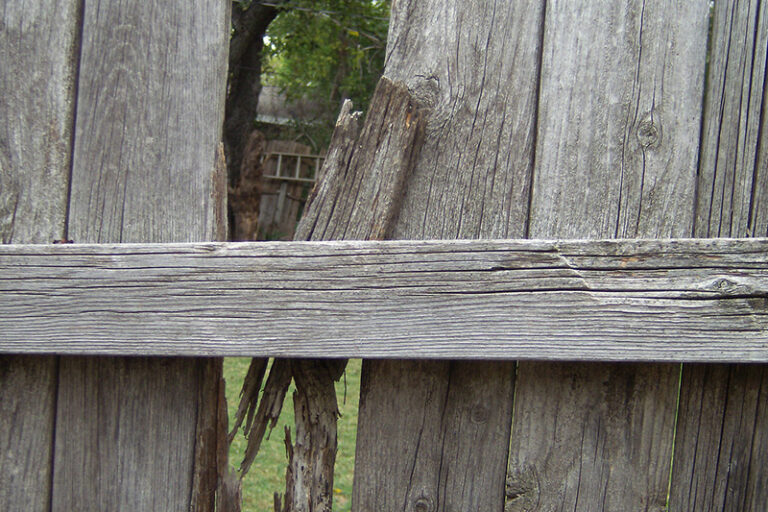
If you’ve ever stared at your fence and wondered whether it’s time to call someone or just let it ride another year, you’re not alone. Here in Denver, fences take a beating. Between the intense summer sun, surprise hailstorms, and those wild temperature swings we get all winter, even a well-built fence eventually shows its age.
At A Straight Up Fence, we get calls every week from homeowners across the Denver metro area asking the same question: “Should I repair this thing or just start over?” It’s a fair question, and honestly, the answer isn’t always obvious. Sometimes what looks like a disaster is actually a quick fix. Other times, that fence you’ve been patching for years is finally ready to retire.
This guide will walk you through the signs that your fence needs attention, help you figure out when repair makes sense versus when replacement is the smarter move, and give you a simple approach to inspecting your fence like a pro. Whether you’re in Thornton, Aurora, or right here in Denver proper, these principles apply to wood, chain link, wrought iron, and just about any other fence material you’ve got.
Common Signs Your Fence Needs Attention
Before you can decide between repair and replacement, you need to know what you’re dealing with. Some problems are obvious. Others hide until they’ve already caused bigger issues. Here’s what to look for when you walk your property.
Visible Damage and Structural Issues
Start with what you can see from a distance. Are boards cracked, split, or missing entirely? Splintering wood isn’t just an eyesore: it’s a sign that the material is breaking down and losing structural integrity.
Next, look at your posts. These are the backbone of any fence, whether you’re dealing with a cedar privacy fence in Highlands Ranch or a chain link setup at a commercial property in Westminster. Posts that are leaning, wobbling, or sitting at odd angles indicate foundation problems. Either the concrete has cracked, the post has rotted below ground level, or the soil has shifted. Any of these scenarios compromises your entire fence.
Sagging gates deserve special attention. At A Straight Up Fence, we’ve seen countless gates that started as minor annoyances and turned into major headaches. A gate that drags or won’t latch properly puts extra stress on surrounding posts and hardware. Left alone, it’ll eventually pull the whole section out of alignment.
Other structural red flags include:
- Panels that have separated from posts or rails
- Gaps appearing between boards or sections
- Rails that have cracked or pulled away from supports
- Fence sections visibly bowing or warping
- Hardware that’s loose, missing, or heavily corroded
Rot, Rust, and Material Deterioration
Different fence materials fail in different ways, but deterioration always accelerates if you ignore it.
Wood fences typically rot from the bottom up. Ground contact and moisture pooling are the usual culprits. Poke suspicious areas with a screwdriver. If it sinks in easily, you’ve got rot. Check the base of posts especially closely: they’re the first to go. In Denver’s dry climate, wood also splits and checks from sun exposure. Untreated or poorly stained wood deteriorates faster, which is why we always recommend proper staining and maintenance.
Metal fences develop rust where the protective coating has been scratched or worn away. Chain link fences show this at connection points and along the bottom edge. Wrought iron fences are particularly susceptible at welds and decorative elements. Minor surface rust can be treated, but once corrosion eats through the metal, that section needs replacement.
Vinyl fences crack and become brittle over time, especially in areas with significant UV exposure. They can also fade, yellow, or warp. While vinyl is marketed as maintenance-free, Colorado’s intense sun does take its toll after a decade or so.
The key with material deterioration is catching it early. A single rotted post is a repair. Rot spreading through half your fence line is a different conversation entirely.
When Fence Repair Makes Sense
Repair is almost always cheaper upfront. The question is whether it’s actually the better value in your situation.
Repair makes sense when:
- Damage is localized. If you’ve got a couple of broken boards from that tree branch that came down last month, or one post that’s gone soft while the others are solid, repair is the obvious choice.
- The fence is relatively young. A fence that’s five or six years into a twenty-year lifespan has plenty of life left. Fixing isolated problems lets you get the full value from your original investment.
- The structure is fundamentally sound. This is the big one. If your posts are solid, your rails are secure, and the overall frame is in good shape, you can replace boards, panels, or sections without rebuilding from scratch.
- Repair costs stay well below replacement costs. A good rule of thumb: if repairs will run less than half what a new fence would cost, repair usually wins.
We work with homeowners all across Denver, from Centennial to Arvada, who’ve gotten years of additional life from their fences through smart repairs. Sometimes all it takes is replacing a few boards, reinforcing a couple of posts, or fixing a sagging gate.
Don’t forget about staining and restoration, either. Before tearing down an old wood fence, it’s worth having us take a look. We can often make necessary repairs, pressure-wash the wood to reveal the original grain, and apply fresh stain. The result looks nearly new at a fraction of replacement cost.
When Full Fence Replacement Is the Better Choice
Sometimes repair just doesn’t make financial or practical sense. Here’s when replacement becomes the smarter investment.
Widespread damage. If more than 20-30% of your fence needs work, you’re approaching the point where piece-by-piece repairs cost almost as much as starting fresh. We see this a lot in older neighborhoods in Englewood, Littleton, and Wheat Ridge where fences from the 1990s are finally giving out all at once.
Multiple failing posts. Posts are everything. They’re set in concrete and support the entire structure. When several posts are rotten, cracked, or leaning, replacing them individually is labor-intensive and expensive. At some point, you’re better off installing new posts with proper depth, concrete, and bracing from the start.
Repeated repairs. If you’ve been patching the same fence every year or two, those costs add up. Worse, each repair often reveals the next problem. A fence that needs constant attention is telling you it’s past its useful life.
Safety and liability concerns. A fence that’s falling over, has exposed nails or sharp edges, or no longer contains pets or children isn’t just inconvenient. It’s a liability. Commercial property owners in Aurora and Northglenn especially need to consider the risk of an inadequate fence on their property.
Aesthetic overhaul. Sometimes the fence structurally works but just looks terrible. If you’re selling your home, updating your landscaping, or simply tired of looking at that weathered eyesore, replacement gives you a clean slate. A new cedar privacy fence or custom design can dramatically improve curb appeal.
End of expected lifespan. Every fence material has a typical lifespan. Wood fences generally last 15-20 years with proper maintenance. Chain link can go 20-25 years. Wrought iron lasts longer but requires ongoing rust prevention. If your fence is approaching or past these benchmarks and showing significant wear, replacement often makes more sense than extending its life another few years.
Factors That Affect Your Decision
Beyond the condition of your fence itself, a few other factors should influence whether you repair or replace.
Age and Overall Condition
A fence that’s two years old with storm damage is an obvious repair candidate. A fence that’s eighteen years old with the same damage might be at the end of its rope anyway.
Think about it this way: if you repair now, how many more years will you realistically get? If the answer is “a couple of years, maybe,” you might be throwing good money after bad. But if the fence has another decade of potential life, repairs make a lot more sense.
Also consider the fence’s history. Has it been well-maintained? Regularly stained and sealed? Or has it been neglected for years? A well-cared-for fence handles repairs better than one that’s already weakened throughout.
Cost Comparison and Long-Term Value
This is where a lot of homeowners get tripped up. Repair costs feel manageable in the moment, but they can add up over time.
Let’s say you spend $800 on repairs this year, then another $600 next year, then $1,200 the year after that. Suddenly you’ve spent ,600 on a fence you’re still going to need to replace eventually. If a new fence costs ,500, you would’ve been better off just replacing it three years ago.
On the flip side, a 0 repair that buys you eight more years of solid fence is a great investment.
Don’t forget about property value, either. A new, well-built fence adds genuine value to your home. A patched-together fence that’s clearly on its last legs… doesn’t. If you’re planning to sell in the next few years, replacement might pay for itself at closing.
How to Inspect Your Fence Like a Pro
You don’t need professional training to do a basic fence inspection. Here’s a straightforward approach that covers the essentials.
Start with an overall visual check. Walk the entire fence line from both sides. Note any obvious damage, leaning sections, or areas that look different from the rest. Take pictures so you can show a contractor exactly what you’re seeing.
Check every post. Give each one a firm push. It should feel solid and not move. Look at the base for signs of rot, especially where wood meets ground. Check that posts are plumb (straight up and down) and level with each other.
Examine rails and panels. Are rails securely attached to posts? Are panels or boards firmly connected to rails? Wiggle them and look for gaps, cracks, or separations.
Test gates. Open and close each gate. It should swing freely, latch securely, and not drag on the ground. A sagging gate puts stress on posts and hinges.
Look for material-specific problems:
- Wood: rot, splits, warping, insect damage, peeling stain
- Metal: rust, bent sections, loose fittings, damaged mesh
- Vinyl: cracks, discoloration, warping, loose sections
Assess the foundation. If you can see concrete footings, check for cracks. Look for soil erosion that might have undermined post stability.
Estimate the scope. After your inspection, categorize issues as minor (cosmetic, easy fixes), moderate (require attention but isolated), or major (structural, widespread). This helps you communicate clearly with a contractor and understand what level of work you’re looking at.
Conclusion
Figuring out whether to repair or replace your fence comes down to a few key questions: How widespread is the damage? How solid is the underlying structure? How much life does the fence have left? And what makes sense financially over the long term?
If you’ve got localized damage on an otherwise sound fence, repair is usually the right call. If you’re looking at widespread problems, failing posts, or a fence that’s already past its expected lifespan, replacement is probably the smarter investment.
Either way, the worst thing you can do is nothing. Small problems become big problems. A leaning post becomes a collapsed section. A sagging gate becomes a broken gate that damages the posts around it. Catching issues early saves money and headaches down the road.
At A Straight Up Fence, we’ve been helping homeowners and commercial property owners throughout Denver, Thornton, Aurora, Centennial, and the entire metro area with exactly these decisions for years. We’re happy to take a look at your fence, give you an honest assessment, and walk you through your options. Whether you need a quick repair, staining to bring old wood back to life, or a complete new fence installation, we’ll help you find the solution that fits your property, your budget, and your timeline.
Give us a call today for a free estimate. We look forward to helping you get a fence you’ll love for years to come.
Frequently Asked Questions
How do I know if my fence needs repair or replacement?
Inspect your fence for localized versus widespread damage. If issues like cracked boards or a single rotted post are isolated and the structure is sound, repair makes sense. However, if more than 20-30% of the fence needs work, multiple posts are failing, or it’s past its expected lifespan, replacement is the smarter choice.
What are the signs of fence post damage?
Fence posts showing damage will lean, wobble, or sit at odd angles. Check the base for rot, especially where wood meets the ground. Push each post firmly—it should feel solid and not move. Rotted or cracked posts indicate foundation problems from cracked concrete, below-ground rot, or soil shifting.
How long does a wood fence typically last?
A wood fence generally lasts 15-20 years with proper maintenance, including regular staining and sealing. Chain link fences can last 20-25 years, while wrought iron lasts longer but requires ongoing rust prevention. Denver’s intense sun and temperature swings can accelerate deterioration if maintenance is neglected.
When is it cheaper to replace a fence instead of repairing it?
Replacement becomes more cost-effective when repair costs exceed half the price of a new fence, when you’re repeatedly patching the same fence every year or two, or when multiple posts are failing. Accumulated repair costs often surpass replacement costs while still leaving you with an aging fence.
Can a sagging fence gate be repaired?
Yes, a sagging gate can often be repaired by adjusting hinges, reinforcing the frame, or replacing damaged hardware. However, if left unaddressed, a dragging gate puts extra stress on surrounding posts and can pull entire sections out of alignment, eventually requiring more extensive repairs or replacement.
How do I inspect my fence for damage?
Walk the entire fence line from both sides, noting obvious damage or leaning sections. Push each post to test stability, examine rails and panels for secure attachment, and test all gates for proper swing and latching. Look for material-specific issues like rot in wood, rust on metal, or cracks in vinyl.