
Keeping your pets safe in your Denver yard isn’t just about putting up any fence, it’s about choosing the right one. Between our unpredictable weather, local wildlife, and strict HOA rules, finding the best fencing solutions for pets in Denver homes requires some thoughtful planning. We’ve helped countless homeowners across the Denver metro area, Boulder, and the Front Range secure their properties while keeping furry family members contained. In this guide, we’ll walk you through everything you need to know to make the best choice for your home and your pets.
Why Denver’s Climate and Wildlife Require Pet-Specific Fencing
Denver’s climate presents unique challenges that make pet-specific fencing essential. Our dramatic temperature swings, sometimes 40 degrees in a single day, can wreak havoc on cheap materials. Wood that isn’t properly treated will warp and crack. Metal that isn’t rust-resistant will corrode. And those gaps that form? They’re escape routes waiting to happen.
Then there’s the wildlife factor. Coyotes are a real concern throughout the metro area, and they’ve become increasingly bold in suburban neighborhoods. A fence that’s too short or has gaps at the bottom puts small dogs and cats at serious risk. We’ve seen cases where coyotes have actually dug under fences or jumped over ones that seemed tall enough.
Denver’s notorious hailstorms and high winds also demand durable construction. Flimsy fencing won’t survive a summer storm season, and a downed fence section means your pet could be gone in minutes. That’s why we always recommend investing in quality materials and professional installation that accounts for our specific regional conditions.
Top Fencing Materials for Denver Pet Owners
Choosing the right material is half the battle when it comes to pet containment. Let’s break down your best options.
Wood and Vinyl Privacy Fences
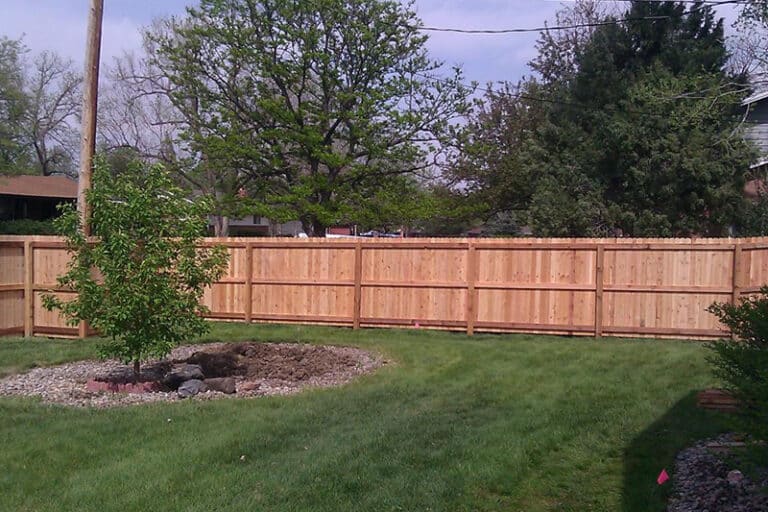
A cedar privacy fence remains one of the most popular choices among Denver pet owners, and for good reason. Cedar naturally resists rot, insects, and our harsh UV exposure. It also eliminates visual stimulation that causes many dogs to bark or try to escape, they simply can’t see what’s on the other side.
We exclusively use western red cedar for privacy fences because it’s both practical and beautiful. Your cedar fence can be built anywhere from 4 feet up to 10 feet tall, depending on your needs and local regulations. For families with jumpers or climbers, that extra height makes all the difference.
Vinyl is another solid option, especially if you want minimal maintenance. It won’t splinter, rot, or need painting. But, it can become brittle in extreme cold, so quality matters here.
Chain Link and Metal Options
Chain link fencing offers durability and affordability that’s hard to beat. It’s especially practical for larger properties or homeowners who want visibility while still containing their pets. The key with chain link is ensuring the gauge is heavy enough that determined dogs can’t push through or bend it.
For smaller pets, we often recommend adding welded wire along the bottom portion to prevent escapes. Wrought iron fencing adds elegance and security, though you’ll need to pay attention to the spacing between bars, small dogs and puppies can squeeze through surprisingly tight gaps.
Metal options also work well for automatic gate systems, which are a game-changer during cold Denver winters when you don’t want to manually open gates in the snow.
Invisible and Electric Fencing Considerations
Invisible fences have their place, but we want to be upfront about the limitations. These systems use buried wires and a collar that delivers a correction when your pet approaches the boundary. They’re often chosen because they don’t obstruct views or require permits.
Here’s the thing though, invisible fences don’t keep anything out. That coyote we mentioned earlier? It’ll walk right through. Same with stray dogs, wildlife, or even well-meaning neighbors who might accidentally let your pet past the boundary.
Some pets also learn to power through the correction if they’re motivated enough. We’ve heard stories of dogs spotting a squirrel and simply accepting the momentary discomfort for the thrill of the chase.
If you do opt for invisible fencing, consider pairing it with a physical barrier along areas where wildlife is most likely to enter. And always supervise outdoor time, especially with smaller pets. For most Denver homeowners, we recommend traditional fencing as the primary containment method, with invisible systems serving as a backup layer if needed.
Height and Design Features That Keep Pets Safe
Height requirements vary dramatically based on your pet’s breed and personality. A lazy basset hound might be fine with a 4-foot fence, while an athletic German Shepherd could clear 6 feet without breaking a sweat. Know your dog.
For most medium to large breeds, we recommend a minimum of 6 feet. If you have a known jumper or climber, consider adding coyote rollers or angled extensions at the top, these make it nearly impossible for pets to get a grip and pull themselves over.
The bottom of the fence matters just as much as the top. Diggers need buried wire mesh or a concrete footer to prevent tunneling. Board and post fences with an open design can be fitted with welded wire using heavy-duty galvanized staples, keeping small dogs from squeezing through while maintaining that attractive look.
Gate design is another critical element. All our fence projects include side gates attached to your home or garage, and we pay careful attention to latches that pets can’t manipulate. Self-closing hinges are worth the investment, they eliminate human error when someone forgets to secure the gate behind them.
We also offer drive gates with secure steel frames for front yards, complete with options like keypads and automatic systems that ensure your perimeter stays secure.
Understanding Denver Fencing Regulations and HOA Rules
Before you fall in love with a fence design, you need to understand what’s actually allowed on your property. Denver has specific codes about fence height, setback requirements, and materials, and violations can mean costly removal or modifications.
Generally, backyard fences in Denver can reach up to 6 feet, while front yard fences are typically limited to 4 feet. Corner lots often have additional restrictions to maintain sight lines for traffic safety. If you need something taller for pet containment, variances are sometimes possible, but you’ll need to go through the proper channels.
HOA rules add another layer of complexity. Many associations dictate acceptable colors, materials, and styles. Some prohibit chain link entirely. Others require architectural review before any installation. We’ve worked with homeowners across the metro area, Boulder, and surrounding communities, and we’re familiar with navigating these requirements.
Our advice? Get everything in writing before you start. We’ll walk you through choosing a fence that fits your style, budget, and timeline while staying compliant with all applicable regulations. It’s much easier to plan around restrictions upfront than to deal with problems after installation.
Conclusion
Finding the best fencing solution for your pets in Denver comes down to understanding your specific needs, your pet’s behavior, your property’s layout, local regulations, and our unique climate challenges. Whether you’re leaning toward a beautiful cedar privacy fence or a practical chain link option, the right choice balances safety, durability, and aesthetics. At A Straight Up Fence Company, we’ve been helping Denver families protect their pets since 2006. Give us a call for a free estimate, and we’ll help you install a fence you’ll love for years to come.