
A backyard pool in Denver is one of those summer luxuries that makes the Colorado sunshine even sweeter. But with that luxury comes responsibility, especially if you’ve got kids, pets, or just want peace of mind when neighbors stop by. Choosing the right pool fence isn’t just about ticking a box on your safety checklist. It’s about finding something that actually looks good in your outdoor space while meeting local codes and standing up to Denver’s unique weather conditions.
We’ve helped countless homeowners across the Denver metro area navigate the sometimes confusing world of pool fencing. And honestly? There’s more to it than most people realize. From understanding municipal requirements to picking materials that won’t buckle under our intense UV exposure, the decisions add up fast. This guide walks you through everything you need to know about selecting a safe and stylish pool fence in Denver, so you can enjoy your backyard oasis without the worry.
Understanding Denver’s Pool Fence Requirements
Before you start browsing fence styles or comparing materials, you’ll need to understand what Denver actually requires. The city follows the International Residential Code (IRC) guidelines for pool barriers, and these aren’t suggestions, they’re enforceable regulations.
In Denver, any pool with a water depth of 24 inches or more must have a barrier that’s at least 48 inches high. That barrier needs to completely surround the pool area, with no gaps larger than 4 inches (this prevents small children from squeezing through). The fence also can’t have any horizontal rails or decorative elements that could serve as footholds for climbing.
Here’s something that catches a lot of homeowners off guard: if your home itself serves as part of the pool barrier (say, the pool is accessible through a back door), you’ll need additional safety measures like door alarms or self-closing mechanisms on any doors leading to the pool area.
We always recommend checking with Denver’s Development Services department before finalizing your plans. Code requirements can vary slightly depending on your specific neighborhood or HOA, and the last thing you want is to install a beautiful fence only to find out it doesn’t meet local standards. A quick phone call can save you thousands in potential rework.
Key Safety Features to Look For
Meeting minimum code requirements is one thing, but we believe in going beyond the basics when it comes to pool safety. Here are the features that really matter.
Height and Climb Resistance
While 48 inches is the legal minimum, we often recommend going taller, especially for families with adventurous kids. A 54-inch or even 60-inch fence provides an extra margin of safety and can actually improve the overall aesthetic proportion in larger backyards.
Climb resistance is equally important. The design of your fence matters as much as its height. Vertical pickets or flat panels are your friends here. Avoid anything with horizontal elements spaced in a way that creates a ladder effect. Ornamental designs can be gorgeous, but make sure those decorative scrolls and patterns don’t give little feet something to grip.
Spacing between vertical elements should be no more than 4 inches, small enough that a child can’t fit their head through. This seems like common sense, but you’d be surprised how many decorative fence options violate this simple rule.
Self-Closing and Self-Latching Gates
Your fence is only as good as its weakest point, and that’s almost always the gate. Self-closing hinges are non-negotiable for pool fences. These mechanisms use gravity or spring tension to automatically swing the gate shut after someone walks through.
But closing isn’t enough, the gate needs to latch securely every time. Self-latching hardware should engage automatically when the gate closes, and the latch release should be positioned at least 54 inches from the ground (or on the pool side of the gate where it’s harder for children to reach).
We’ve seen too many pool fences fail at this critical point. A gate that doesn’t quite close all the way, or a latch that’s easy for a determined four-year-old to figure out, essentially defeats the purpose of the entire barrier. Invest in quality hardware here, this isn’t the place to cut costs.
Popular Pool Fence Materials and Styles
Now for the fun part, picking a style that complements your home and landscape. Denver homeowners have several excellent options, each with distinct advantages.
Mesh Pool Fencing
Mesh fencing has become incredibly popular for pool barriers, and for good reason. It’s nearly transparent, so it doesn’t obstruct views of your pool or backyard. The material is typically a heavy-duty polyester or nylon that’s strong enough to prevent climbing but lightweight enough for easy removal.
This removable aspect is actually a major selling point. Hosting a pool party for adults only? You can take down the mesh panels temporarily. Have grandkids visiting for the summer? Put it back up in minutes. For families whose pool safety needs change seasonally, mesh offers flexibility that permanent fencing can’t match.
The downside? Mesh isn’t the most visually striking option. It’s functional and unobtrusive, but it won’t add architectural interest to your outdoor space. Think of it as the practical choice rather than the showpiece.
Glass Pool Fencing
If you want your pool fence to make a statement, glass is the way to go. Frameless glass panels create an almost invisible barrier that lets your pool and landscaping take center stage. The contemporary look works beautifully with modern architecture, and frankly, it just feels luxurious.
Glass fencing uses tempered safety glass, the same stuff in car windshields, so it’s incredibly strong. A well-installed glass fence can handle significant impact without shattering.
The catch? Glass requires more maintenance than other options. Water spots, fingerprints, and mineral deposits show up readily on glass surfaces. You’ll need to clean it regularly to maintain that pristine look. It’s also the most expensive pool fence option by a significant margin. But for homeowners who prioritize aesthetics and don’t mind the upkeep, glass delivers an unmatched visual impact.
Aluminum and Wrought Iron Options
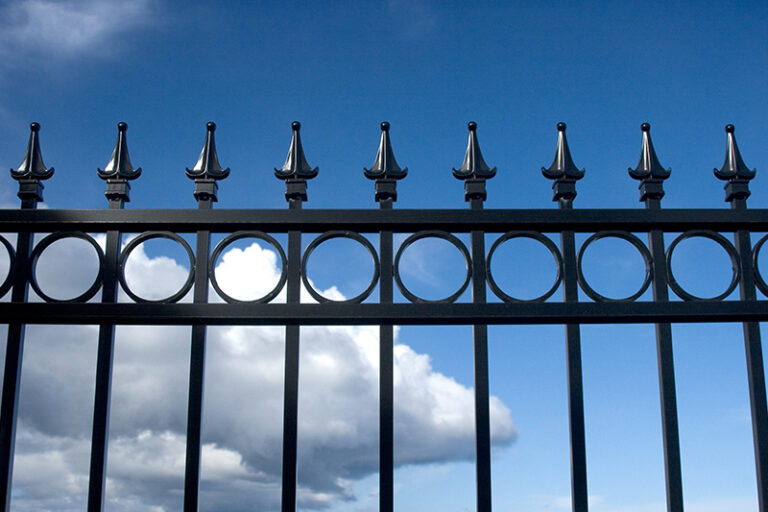
For those who want something more traditional, or something that echoes the architectural details of their home, metal fencing offers timeless appeal. Wrought iron, in particular, adds elegance and can be customized with decorative elements that complement your home’s style.
At A Straight Up Fence Company, we’ve been fabricating custom wrought iron fences and gates right here in Denver since 2006. There’s something special about metalwork that’s designed specifically for your property, whether you’re going for classic Victorian scrollwork or clean contemporary lines.
Aluminum is a more budget-friendly alternative that mimics the look of wrought iron without the weight or maintenance requirements. Modern powder-coating technology means aluminum fences resist rust and can be finished in virtually any color. For Denver’s dry climate, aluminum holds up remarkably well.
One consideration with metal fencing: make sure the design meets safety requirements. Those beautiful decorative patterns need to be spaced correctly, and horizontal rails should be positioned to prevent climbing. A good fence company will design with both safety and aesthetics in mind.
Balancing Aesthetics With Your Outdoor Space
Here’s where we see a lot of homeowners struggle. You want a fence that keeps your pool safe, but you don’t want your beautiful backyard to feel like it’s surrounded by a prison yard. The good news? You really can have both.
Start by considering your home’s existing architecture and your landscape design. A contemporary home with clean lines pairs naturally with glass or simple aluminum fencing. A Craftsman-style house might look better with custom wrought iron that echoes the home’s metalwork details. Ranch properties in the Denver metro often benefit from split rail or rustic wood elements combined with code-compliant pool fencing.
Color matters more than people realize. A black fence tends to recede visually, making it less obtrusive in your sightlines. White or light colors stand out more but can complement certain home styles beautifully. Bronze and dark brown tones work well with natural landscapes and earth-toned exteriors.
Don’t forget about integration with your overall outdoor design. Your pool fence doesn’t have to stand alone, it can connect with privacy fencing, patio structures, or garden walls to create a cohesive outdoor living space. We often work with homeowners to design pool barriers that transition seamlessly into cedar privacy fencing for other areas of the yard, creating distinct zones while maintaining visual flow.
Landscaping can also soften the appearance of pool fencing. Strategic plantings, ornamental grasses, flowering shrubs, or climbing vines on adjacent structures, draw the eye away from the fence itself and toward the overall environment. Just make sure plants don’t provide climbing access over the barrier.
Climate Considerations for Denver Pool Fences
Denver’s climate is unlike anywhere else in the country, and your pool fence needs to handle everything our weather throws at it. We’re talking intense UV radiation at altitude, dramatic temperature swings, occasional hailstorms, and surprisingly strong winds.
UV exposure is probably the biggest factor. At our elevation, the sun is relentless. Materials that hold up fine at sea level can fade, become brittle, or degrade quickly here. For mesh fencing, look for UV-stabilized fabrics with solid warranties. For metal options, powder coating is essential, it provides a durable finish that resists fading and corrosion far better than paint.
Temperature fluctuations matter too. Denver can swing 40 degrees in a single day, and those cycles of expansion and contraction stress materials over time. Aluminum handles this well because it’s lightweight and flexible. Wrought iron is heavier but extremely durable when properly finished. Wood can work, but it requires more maintenance to prevent cracking and warping.
Wind is an underrated concern. Our afternoon gusts can be surprisingly strong, especially in the spring. Solid panel fencing catches wind like a sail, putting stress on posts and hardware. This is one reason mesh fencing works well for pool barriers, wind passes right through. If you prefer solid fencing, make sure your posts are set deep and secured properly.
Hail happens. While we can’t predict when the next big storm will roll through, we can choose materials that withstand impact. Tempered glass is remarkably hail-resistant, as is aluminum and wrought iron. Mesh fencing basically ignores hail entirely. The real vulnerability with any fence is the hardware, hinges, latches, and gate mechanisms should be robust enough to survive occasional abuse from Mother Nature.
Hiring a Professional vs. DIY Installation
We’ll be honest, pool fence installation isn’t the best DIY project for most homeowners. The stakes are too high, both in terms of safety and code compliance.
Professional installation starts with proper planning. An experienced fence company will survey your property, identify utility lines, assess soil conditions, and ensure the fence layout meets all local requirements before any digging begins. They’ll know how deep to set posts for Denver’s soil conditions (frost depth matters here) and how to handle slopes or irregular terrain.
Permitting is another consideration. Denver requires permits for most fence installations, and your contractor should handle that paperwork as part of the job. They’ll also know about any HOA requirements specific to your neighborhood, something that’s caught more than a few DIY installers off guard.
That said, we understand the appeal of doing it yourself. Removable mesh fencing is specifically designed for homeowner installation and can be a reasonable DIY project if you’re comfortable with power tools and measuring precisely. The manufacturer’s instructions are typically straightforward, and mistakes are correctable since the fence can be taken down and repositioned.
For permanent fencing, especially wrought iron, aluminum, or glass, professional installation is the way to go. These materials require specialized tools, precise leveling, and proper anchoring. A poorly installed pool fence isn’t just an eyesore: it’s a liability.
When choosing a fence company, look for local experience. A contractor who’s worked in Denver understands our soil, our weather, and our codes. At A Straight Up Fence Company, we handle everything from initial consultation through final inspection, including in-house metal fabrication for custom projects. We’ve been doing this in the Denver metro area since 2006, and we’ve learned that proper installation makes all the difference in how a fence performs over time.
Conclusion
Choosing a safe and stylish pool fence in Denver comes down to balancing several factors: local code requirements, safety features that go beyond minimums, materials suited to our unique climate, and aesthetics that enhance rather than detract from your outdoor space.
We’ve walked you through the essentials, from understanding Denver’s 48-inch height requirements and proper gate hardware to comparing mesh, glass, and metal options. Climate considerations like UV exposure and temperature swings should influence your material choice, and for most permanent installations, professional help is worth the investment.
The right pool fence doesn’t just check a safety box. It becomes part of your backyard’s character, protecting what matters most while contributing to an outdoor space you actually want to spend time in. Whether you’re drawn to the transparency of glass, the classic appeal of wrought iron, or the practicality of mesh, there’s a solution that works for your home, your family, and your budget.
If you’re ready to explore your options, we’d be honored to help. From the initial design conversation through fabrication in our Denver shop to final installation, we’re here to make sure your pool fence is something you’ll love for years to come.